A jaw tension self-check
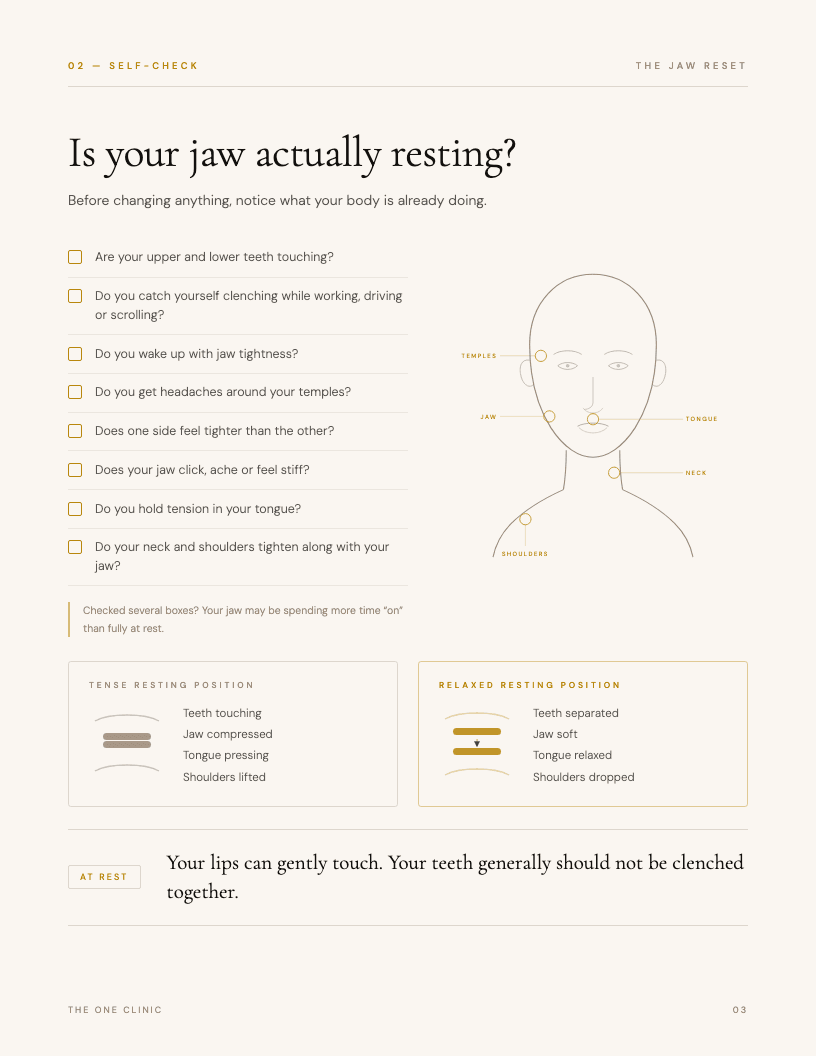
Eight questions that tell you whether your jaw is resting or quietly working all day.
New clients, 50% off your first SculptONE™ Facial or Scalp Therapy. See specials
Free guide
Most people clench without ever noticing. This is a two-minute practice for finding that pattern and giving it somewhere to go.
Stress doesn’t always leave when the stressful moment does. Sometimes the nervous system keeps repeating the physical pattern it learned under pressure: clenching, bracing, tightening. Over time that pattern gets familiar enough that tension starts to feel like your baseline.
This guide won’t force your jaw to relax. It will help you notice the pattern, and give your nervous system a different experience of it.
What’s inside
Eight questions that tell you whether your jaw is resting or quietly working all day.
Where your teeth, tongue and shoulders actually belong, plus a breathing pattern that helps you let go.
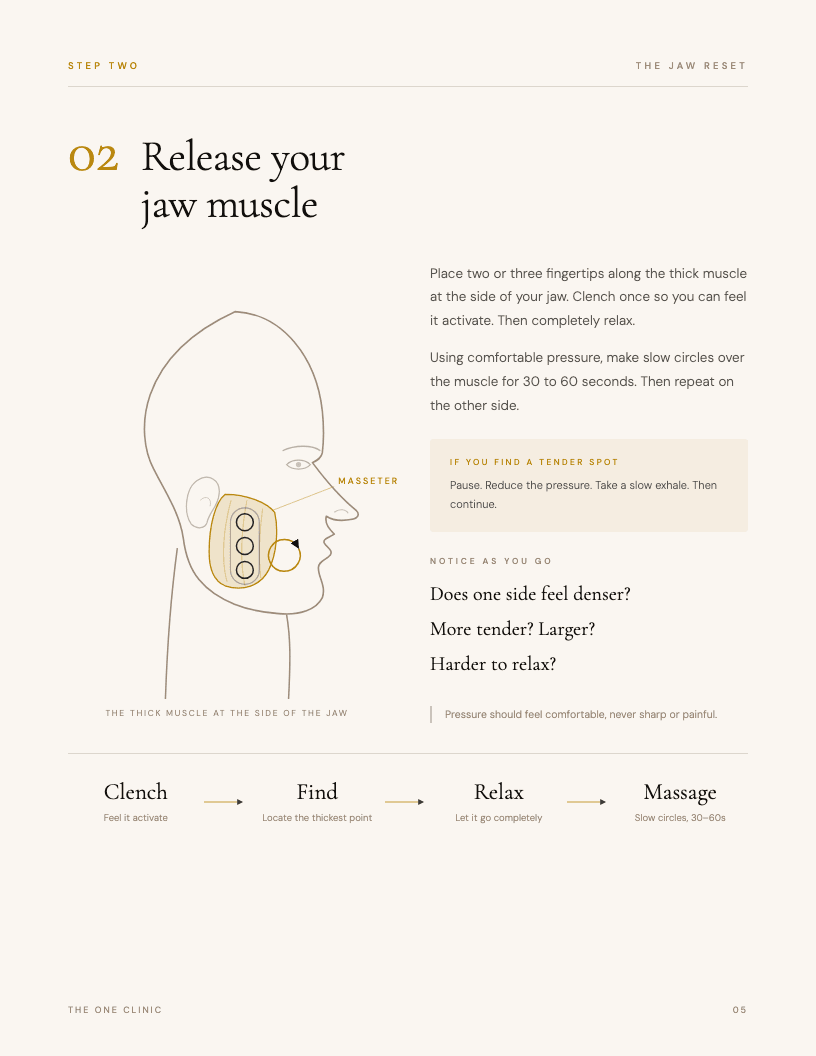
How to find the thick muscle at the side of your jaw, and how to work it without overdoing the pressure.
The second muscle almost everyone forgets, and how to tell whether anything actually changed.
When the tension feels deeper
Some of the muscles and soft tissues involved in jaw tension are difficult to approach effectively from the outside alone. That is one reason we use intraoral, or buccal, techniques during SculptONE™. Working from inside the mouth lets us approach the jaw, cheek and surrounding tissue from a completely different angle.
Sometimes the face doesn’t need more force.
It needs permission to stop bracing.
Call us and we'll help you work out whether a sculpting facial is the right next step for your jaw.
This guide is for general wellness and educational purposes only. It is not intended to diagnose or treat TMJ disorders, dental conditions, chronic pain or other medical conditions. If you experience persistent jaw pain, locking, significant clicking, difficulty opening your mouth, dental problems or worsening symptoms, please consult an appropriate licensed medical or dental professional.